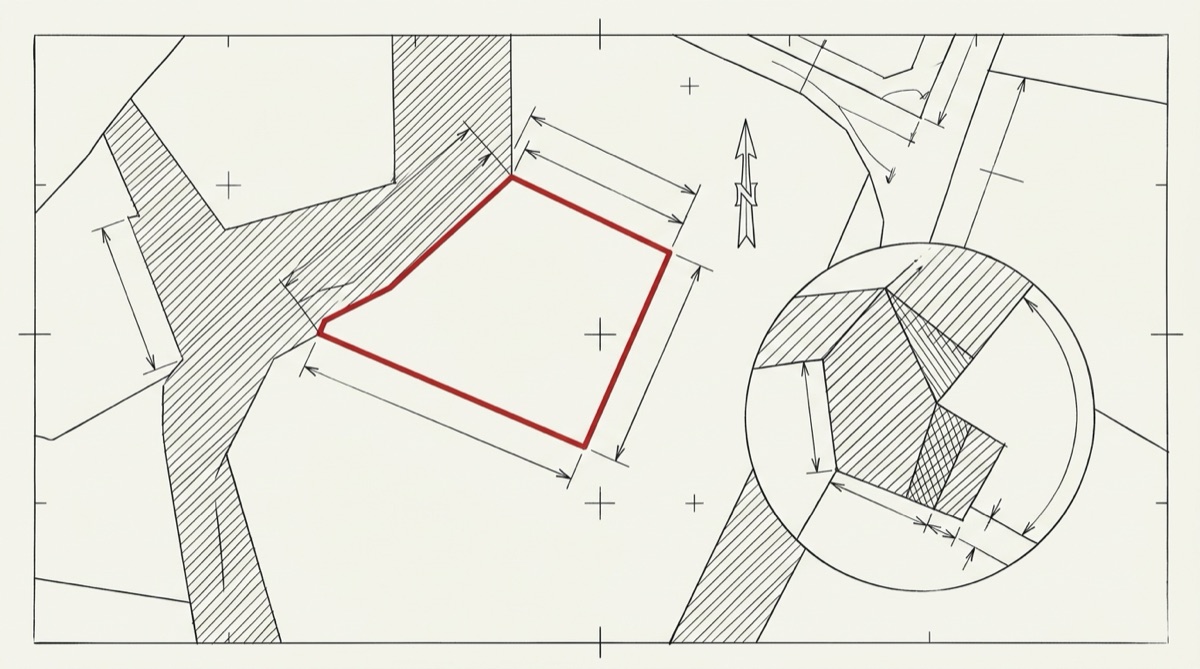
Ask most planning tools what a site is zoned, and they’ll tell you: GRZ1. General Residential Zone, Schedule 1. Correct, and almost useless on its own.
The zone code is a pointer. The rules that actually govern what you can build — minimum lot size, maximum building height, garden-area requirement, site coverage, setbacks — are set in the schedule attached to that zone, and councils vary those numbers. Two GRZ1 sites in two councils can have different minimum subdivision sizes and different height caps. The zone code hides that. The schedule is where the answer lives.
Why the schedule is hard
Schedules aren’t in a tidy API. They’re in the council’s planning scheme — a PDF ordinance, amended continuously, where a single clause can override a state default for one zone in one municipality. Reading them correctly means knowing which clause wins, when a state default applies, and when a local variation replaces it.
That’s the work most tools skip. It’s slow, it doesn’t scale by scraping, and it goes stale the moment an amendment lands.
What Feasibly does instead
For Victoria, we interpret every council-specific zone schedule by hand from the source scheme — 620+ of them, and monitor daily for amendments. Every value we return carries two things a scraped number never can:
- A source citation. The exact clause the number came from.
- A confidence tier. Whether it’s a human-verified reading of the schedule, a machine extraction to confirm, or a state default that no council variation touched.
So when Feasibly says a site’s minimum lot size is 300 m², you can see it’s Schedule GRZ1, Clause 32.08-3, verified, not a guess averaged out of a PDF.
The guarantee
We put our name on it: if a lookup returns the wrong zone, that lookup is free and we credit ten more. Every claim becomes a correction in the public changelog. Schedule-grade means underwritten, not best-effort.
That’s the layer. Read how we verify it, or screen a site and see the citations yourself.